Start with the cause
Before deciding what to do with the visible damage, find out why it happened. A loose plank may come from an uneven subfloor. Dark wood may point to a leak. Cracked tile can indicate movement below the tile. Carpet ripples may come from lost tension rather than worn material.
Repairing only the surface without correcting the cause can lead to the same problem returning. The first inspection should look at nearby plumbing, door leaks, appliance connections, subfloor movement, transitions, and signs of moisture. Once the source is understood, the damaged area can be evaluated honestly.
Hardwood repair
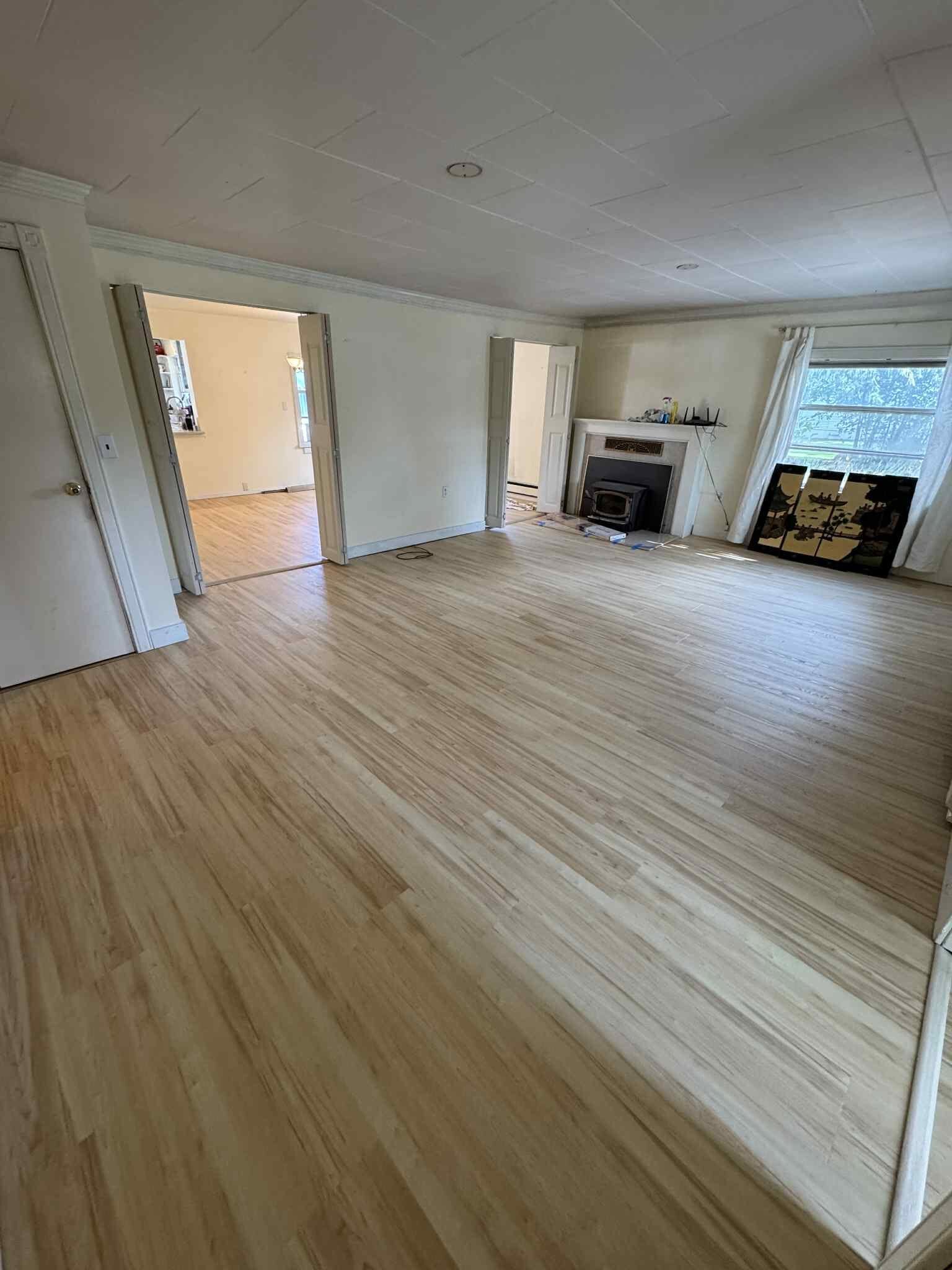
Hardwood can often be repaired when damage is limited to a few boards. Scratched, stained, split, or cupped boards may be removed and replaced, provided a compatible wood species, width, thickness, and profile can be found. The repair boards may need finishing so they blend with the surrounding floor.
Widespread movement, deep water damage, major subfloor failure, or repeated sanding can make replacement a better direction. Color matching is not always exact because existing wood changes with age and sunlight. A carefully placed repair can still look natural, especially when board lengths and grain are varied through the patched area.
LVP repair
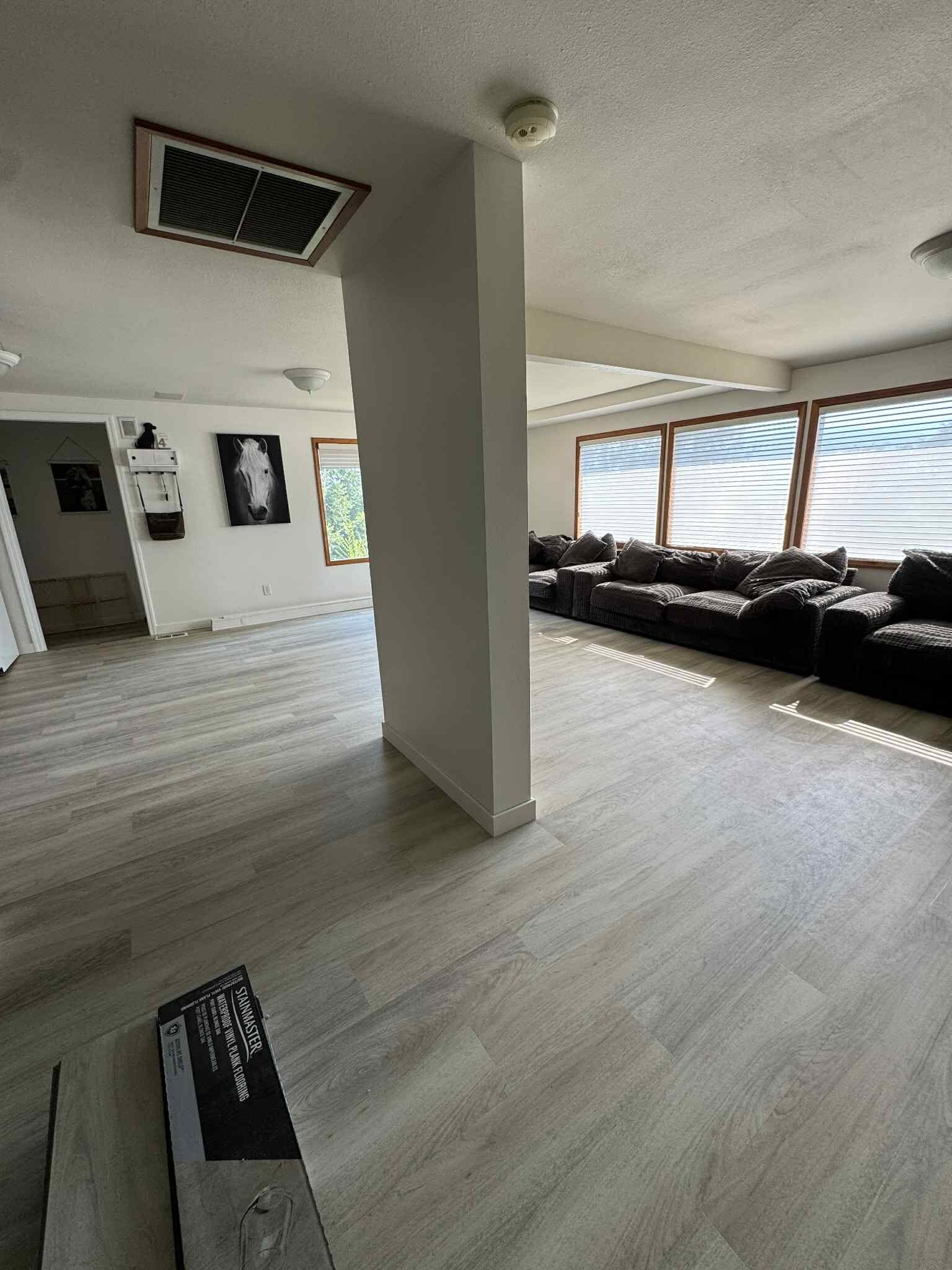
Individual LVP planks can sometimes be replaced when they are scratched, chipped, or damaged by a heavy object. Click-lock floors may need to be taken apart from the nearest wall until the damaged plank is reached. In other cases, an approved plank-replacement method can address a section without lifting the entire room.
Having spare planks from the original installation is extremely helpful. Colors and locking profiles change between product runs, even when the name appears similar. If no match exists, a plank from a closet may be moved into the visible area while a close replacement goes in the less noticeable location.
Laminate repair
Laminate repairs follow many of the same steps as LVP, but water damage needs particular attention. A swollen wood-fiber core does not return to its original shape after drying. Damaged planks should be removed, and the source of moisture must be corrected before replacements are installed.
A small damaged area with available matching material is a good repair candidate. Broad swelling across several rooms, broken locking joints, or repeated moisture exposure can make replacement more sensible. The subfloor should be checked for flatness because flexing can damage new joints if the underlying condition remains.
Carpet repair
Carpet can often be re-stretched when it develops ripples but remains in otherwise good condition. Small burns, stains, or damaged sections may be patched with matching carpet. Seams can sometimes be corrected when the backing and surrounding material are still sound.
A patch needs donor material with the same color, texture, pile direction, and wear. A leftover remnant is best. Carpet taken from a closet can sometimes provide a closer match than new material. Broad staining, damaged backing, strong odors, or worn traffic paths usually make a full replacement the cleaner result.
Tile repair
A cracked or loose tile can often be replaced individually. The damaged tile is carefully removed, the setting surface is cleaned and repaired as needed, and a matching tile is installed. Grout color and age affect how closely the repair blends at first.
Several cracks following the same line may indicate movement in the subfloor or slab. Loose tile across a wide area can point to a bonding or preparation problem. In those cases, replacing a single piece treats the symptom rather than the cause. The base should be inspected before deciding how much of the installation needs to come out.
Signs replacement may be better
Replacement is often the clearer path when damage covers a large percentage of the room, matching material cannot be found, water has affected the subfloor, or the floor is failing in several places. Multiple previous patches can also leave a surface that looks uneven even when each repair is technically sound.
A floor may also be ready for replacement when the layout no longer works with adjoining rooms, transitions create trip points, or the material cannot handle the moisture and traffic of the space. The goal is not to remove more than needed. It is to choose a solution that will remain stable and look complete.
What a repair visit involves
Photos are a useful first step, but an on-site look may be needed to check movement, moisture, material thickness, and the condition below the floor. If spare material is available, set it aside and share any product labels or installation records you have. Those details can improve the chance of a close match.
MG Flooring repairs hardwood, LVP, laminate, carpet, and tile across the Wenatchee Valley. When a repair is practical, the work focuses on the damaged area and its underlying cause. When replacement is the better choice, you get a clear explanation of why before the old floor is removed.
Quick answers
Can one damaged flooring plank be replaced?
Often, yes, especially when matching material is available and the surrounding locking joints and subfloor are sound.
Can carpet wrinkles be repaired?
Many carpet ripples can be corrected by re-stretching when the backing and edges remain in good condition.
When should a cracked tile be inspected more closely?
Several cracks in a line or repeated cracking may point to movement below the tile and should be evaluated before another tile is installed.